Recycling and Sustainability at Earls Court Cleaners
 At Earls Court Cleaners, sustainability is built into the everyday rhythm of our operations. Our recycling and sustainability approach is designed to reduce waste, improve material recovery, and support a cleaner local environment across the communities we serve. From sorting packaging carefully to choosing better transport options, we aim to make each part of our service more efficient and more responsible. We have set a clear recycling percentage target to keep improving year after year, with the aim of diverting a growing share of operational waste away from landfill and into reuse or recycling streams.
Our target is not just a number on paper; it shapes how we manage everything from hangers and garment covers to cardboard, plastics, and general back-of-house waste. We track performance regularly and look for practical changes that increase the amount of material recovered. This includes working with suppliers to reduce unnecessary packaging and encouraging staff to separate waste at the source. By focusing on measurable progress, our Earls Court cleaners sustainability plan keeps moving forward in a way that is realistic, transparent, and community-minded.
The boroughs around Earls Court have increasingly adopted stronger approaches to waste separation, and that local direction supports our own recycling efforts. In nearby areas, residents and businesses often separate paper, mixed recycling, food waste, and residual waste into different streams, which helps improve the quality of collected materials. We mirror that attention to sorting within our own site, making sure recyclable items are not contaminated before they leave our premises. This small but important discipline is one of the reasons cleaners recycling performance can improve without compromising service quality.
 A key part of our environmental strategy is using local transfer stations where appropriate, helping to keep disposal journeys shorter and more efficient. Working with nearby waste and recycling facilities allows us to reduce transport distances and align with local collection systems. These transfer stations help route recyclable materials toward the correct processing channels, whether that means metals, plastics, paper, or other recoverable items. By supporting a more local waste chain, Earls Court Cleaners can lower the environmental impact associated with moving materials long distances.
We also pay attention to the kind of waste generated by a laundry and dry-cleaning business. For example, cardboard from incoming deliveries is flattened for recycling, plastic wrappings are sorted separately, and clean hangers are checked for reuse wherever possible. Some borough recycling strategies place emphasis on keeping specific materials uncontaminated, and we reflect that principle in our daily routines. The result is a more effective recycling flow that fits naturally with the area’s broader waste separation culture and helps strengthen cleaner recycling outcomes.
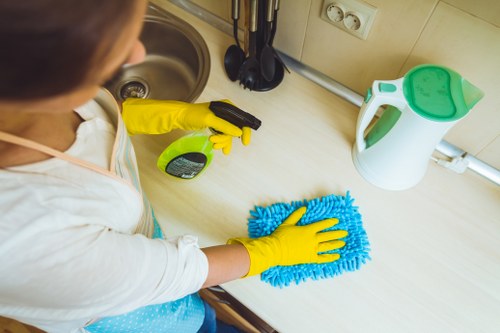 Another important pillar of our sustainable cleaning approach is our partnership with charities. Rather than sending usable items straight into disposal channels, we look for opportunities to donate or redirect suitable garments and related materials through local charitable organisations. This not only extends the life of items that still have value, but also supports community initiatives that benefit people in need. Partnerships with charities are especially meaningful because they connect environmental responsibility with social responsibility, turning potential waste into practical support.
Our charitable work is guided by the idea that sustainability should do more than reduce waste; it should create value where it can. Items that are no longer suitable for our usual service path may still be useful for textile recovery, reuse projects, or donation-led redistribution. By participating in these efforts, Earls Court Cleaners contributes to a wider circular economy where materials stay in use for longer. This is one of the most effective ways to make recycling at Earls Court Cleaners meaningful and tangible.
 Transport is another area where we have made substantial progress. Our low-carbon vans are selected to reduce emissions on local routes, helping us serve customers with a smaller environmental footprint. These vans support shorter, more efficient journeys and are an important part of our plan to reduce fuel use across day-to-day operations. In a borough landscape where local air quality and traffic congestion are ongoing concerns, choosing lower-emission vehicles is a practical contribution to cleaner streets and healthier neighbourhoods.
The shift toward low-carbon van use also complements our recycling goals. If collection and delivery routes are more efficient, then waste and materials can be transported with less environmental cost. We review routes carefully and look for ways to combine trips, reduce idling, and improve load planning. This means that sustainability is not limited to what happens inside the building; it extends into the movement of goods, staff, and recovered materials across the area. In this way, our Earls Court Cleaners recycling approach links logistics with environmental stewardship.
 Looking ahead, our recycling percentage target will continue to guide improvements in waste handling, procurement choices, and staff training. We aim to increase the share of recyclable and reusable materials year on year, while keeping contamination low and recovery rates high. This commitment supports both operational efficiency and responsible environmental management. It also reflects a broader awareness that businesses in the local area have a role to play in borough-wide waste separation efforts and in creating cleaner outcomes for everyone.
At Earls Court Cleaners, sustainability is not treated as a side project. It is part of how we think about materials, transport, partnerships, and long-term responsibility. By combining local transfer stations, charity collaborations, and low-carbon vans with disciplined waste sorting and recycling targets, we are building a service model that is both practical and forward-looking. Our aim is simple: to keep improving recycling and sustainability in ways that are measurable, local, and lasting.